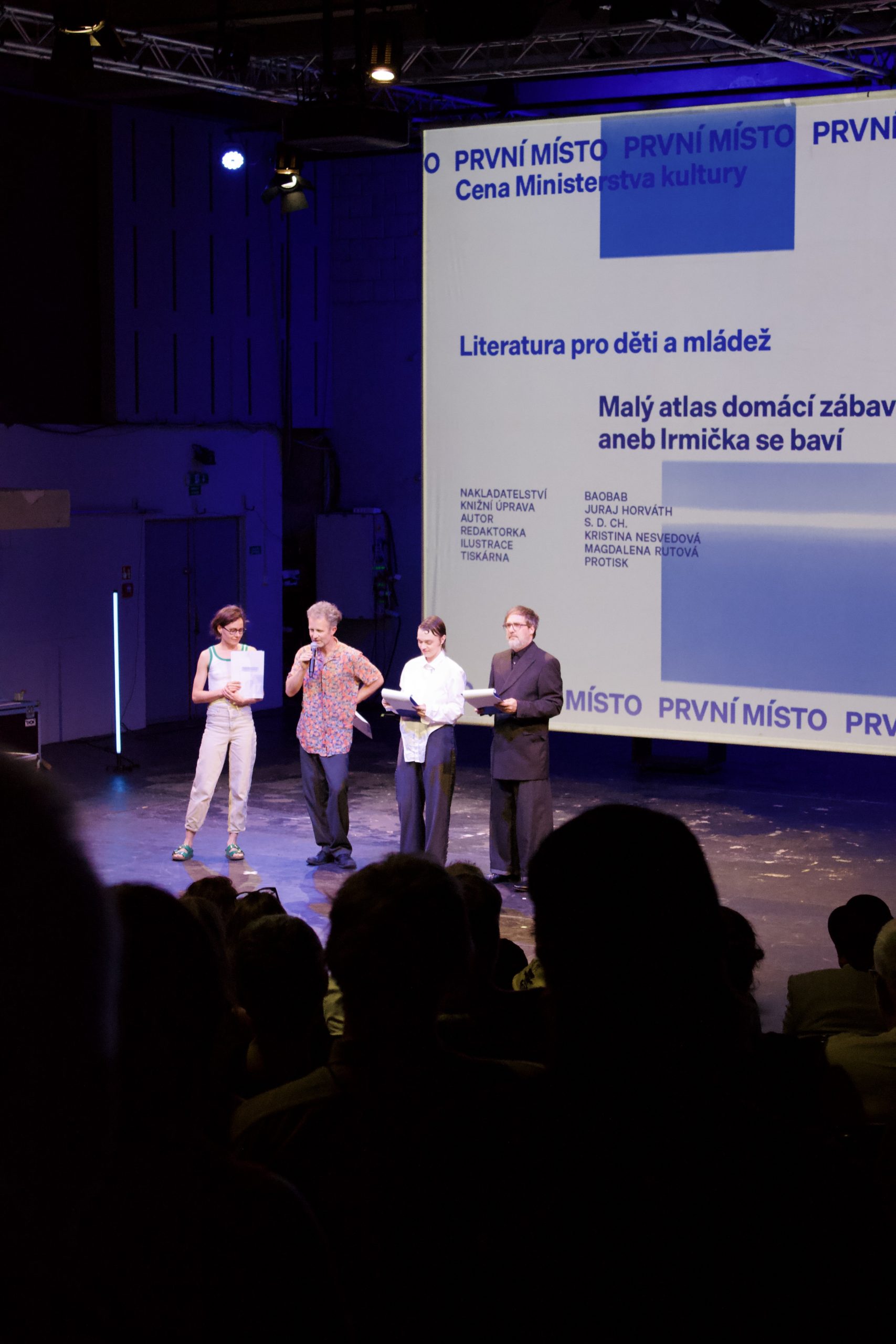
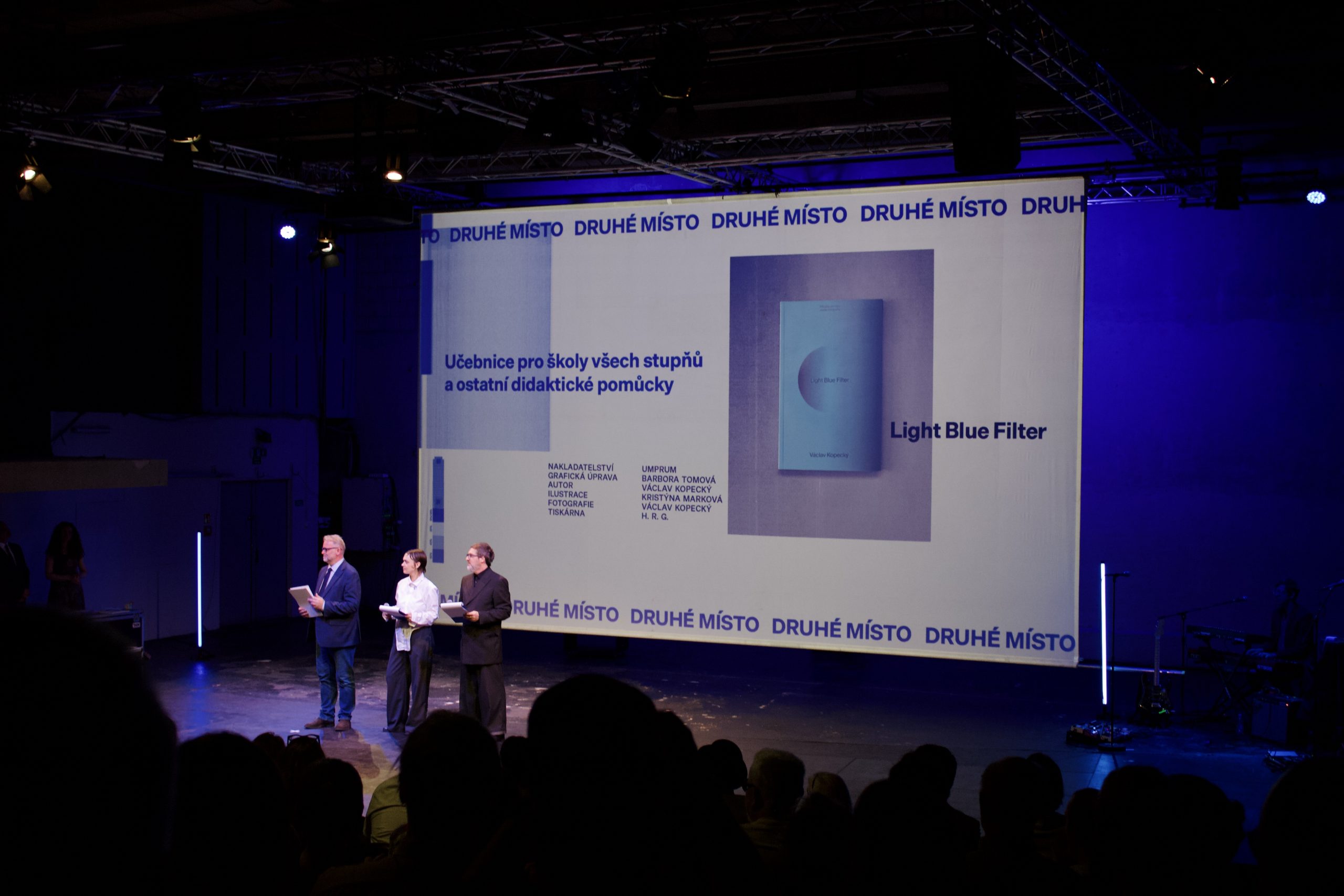
On June 2, 2026, awards for the best domestic book design were presented at Studio Hrdinů in the basement of Prague’s Trade Fair Palace. The jury of the 61st edition of the competition recognized, among other works, an extensive account of samizdat literature, a children’s book about the “family tree” of Prague’s trams, and a collection of poetry created by recycling well-known quotes and song lyrics.
The competition has been organized since 1965 by the Museum of Czech Literature and the Ministry of Culture, which collaborate with the Czech Center in Brussels on the BOOKSPACE project. Thanks to this collaboration, we are bringing the best of Czech book design to audiences in the Benelux region. Visitors to the BOOKSPACE venue can personally browse through and examine not only the newly awarded titles but also successful books from several previous editions of this prestigious competition.
A total of 337 projects were submitted to the current 61st edition of the Most Beautiful Czech Books of the Year (NČKR). A jury composed of graphic designers, illustrators, art theorists, and printers selected the most beautiful titles from the 60 nominees across 7 genre-based categories, and in addition, 4 special prizes were awarded. First-place winners in the main categories receive 50,000 Czech korunas from the Ministry of Culture of the Czech Republic, intended for the publishers. The authors of this year’s NČKR visual identity and the catalog of winning books are graphic designers Zuzana Burgerová and Robert V. Novák.
“Among other things, the competition is a way to promote Czech books abroad. The quality of our book design is also evidenced by the fact that two titles awarded last year in the NČKR competition were shortlisted for the international competition The World’s Most Beautiful Books, where they stood out among nearly 660 books from a total of 33 countries,” said Michal Stehlík, director of the Museum of Czech Literature, which co-organizes the competition.
Overview of Winners in the Main Categories
In the largest category, Specialized Literature, first place went to the National Museum’s publication Josef Ladislav Píč and Czech Archaeology between the 19th and 20th Centuries, featuring a modest yet modern graphic design by Jan Stuchlík and Ondřej Bouška. First place in fiction went to the two-volume parallel diaries of the first Czechoslovak visitors to Tibet, *Tibetan Diaries 1954*, published by Host and designed by Alena Gratiasová.
In the children’s books category, Baobab Publishing scored with the visually striking book *A Little Atlas of Home Entertainment, or Irmička Has Fun*, designed by Juraj Horváth and illustrated by Magdalena Rutová. In the traditionally smaller category of Textbooks for Schools of All Levels, the winner was a publication by the National Gallery in Prague: the pocket-sized mini-monograph Kučerová: Paintings in Your Pocket (graphic design by Bohumil Vašák and Tereza Velíková).
In the Fine Arts Books category, the jury awarded first place to the publication *Tunnel Vision: Exploring the Limits of Our Perception* (graphic design by Josefína Karlíková, published by UMPRUM). Carolina Sidon’s self-published book, “The Architecture of Adventure Games in Graphic Form,” by Elena Evstigneeva, took first place in its category. Among the Catalogs, the winner was the publication Vychýlit směr by Jozef Ondrík, published by the Center for Contemporary Art Prague.
Student Works and a Slovak Touch
The Museum of Czech Literature also presented awards for student works. The Arno Sáňka Award was given to Adéla Janatová from VOŠG Hellichova for her book *Death, Transformation, and Reincarnation of Writing*. Once again, this year, Slovak publishers were able to submit their books in a non-competitive section, where the jury compiled a curated selection of 16 books. Visitors to the upcoming exhibitions will thus be able to compare Czech and Slovak design legacies.
An original catalog was also published for the 61st edition of the competition, featuring the added theme “Believe in the Book,” with graphic design by Zuzana Burgrová and Robert V. Novák; its concept is partly inspired by so-called “makulatura”—that is, waste or defective printed material.
Where can you see the books?
The winning books will now travel to exhibitions throughout the Czech Republic and abroad. For those interested from Belgium and neighboring countries, however, the easiest way is to visit our BOOKSPACE project, which features a cross-section of works from both the current and past editions of the competition.